Loading articles…

October 2, 2026
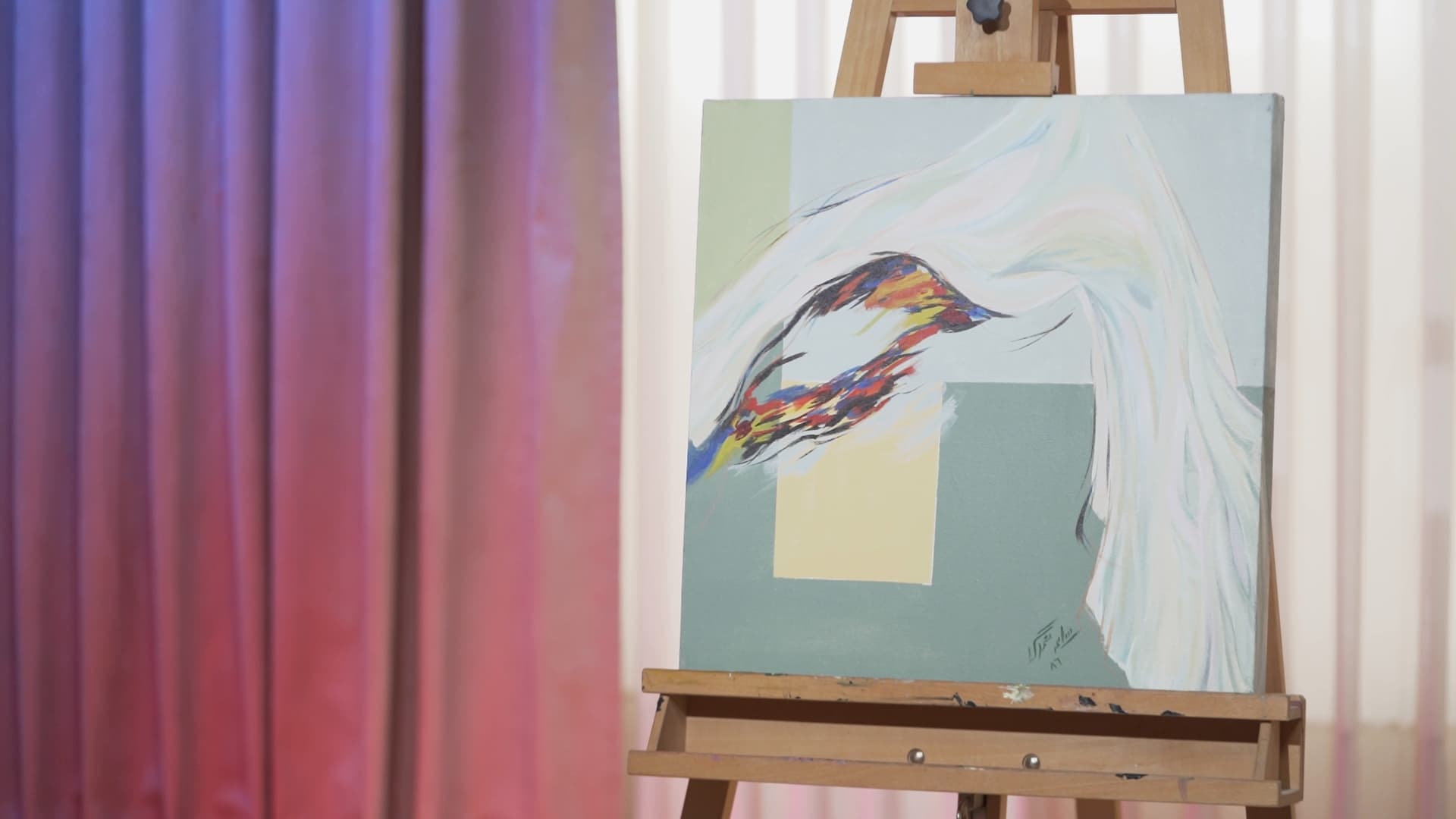
Sama Dance Collection By Salimeh Motamedi
Iranian literature and art have long shared a close relationship. Many of the great works of Persian literature—from Ferdowsi’s Shahnameh and the poetry of Hafez to Saadi’s Bustan and Golestan and Rumi’s Masnavi—have been illustrated at different points in history and have inspired the creation of works of art. This connection continues today. Iranian artists still turn to the heritage of Persian literature for inspiration, but the way they engage with this heritage is no longer the same.
In earlier centuries, this relationship was often more direct, with artists depicting literary narratives and characters according to their descriptions in the texts. Many Shahnameh miniatures, for example, directly portrayed scenes from its stories. Similarly, illustrations of Saadi’s tales depicted their characters and the settings in which the stories took place. Over time, however, this relationship moved beyond direct illustration, as literary ideas, symbols, and metaphors also became part of the visual vocabulary of artists.
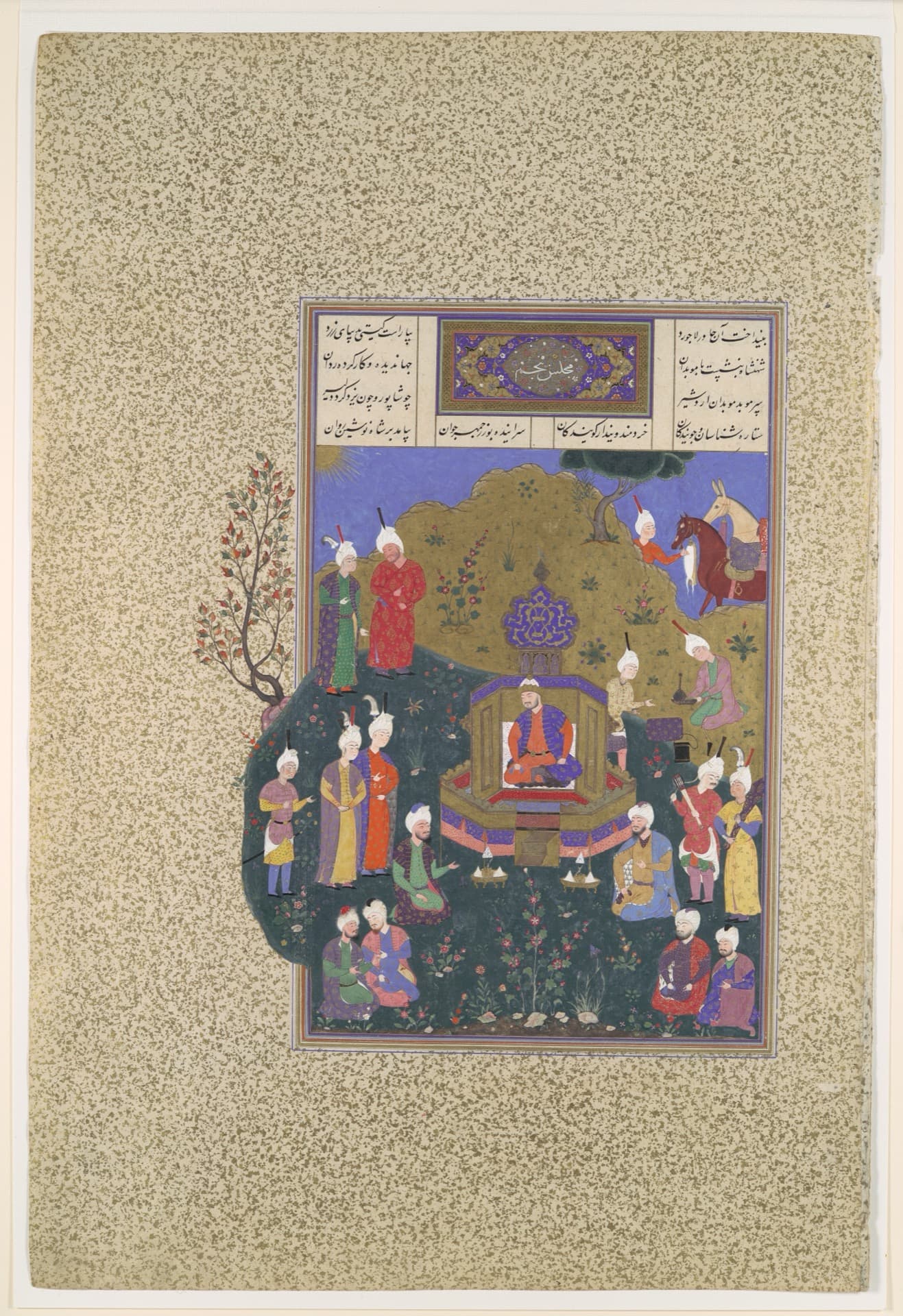
Muzaffar 'Ali's illustration of the Shahnameh, in the Metropolitan Museum of Art, shows Buzurgmihr appearing at Nushirvan's assembly of sages.
Today, Persian literary works serve less as sources for direct representation and more as sources of inspiration. Iranian artists look to the rich tradition of Persian literature for ideas and create new artistic experiences from it. Throughout Iranian Women Painters, one finds many examples of artists approaching this literary world from a new perspective, drawing on its themes—or even simply on the mood and feelings a literary work evokes in them—to create their own work.
Salimeh Motamedi created two series, Unity in Diversity – Diversity in Unity and Sama Dance, inspired by mystical concepts that also have a strong presence in Persian poetry. In these two series, she explores ideas such as the unity of existence and the mystic’s journey in search of truth—a search that finds visual expression through the whirling movements of Sama.
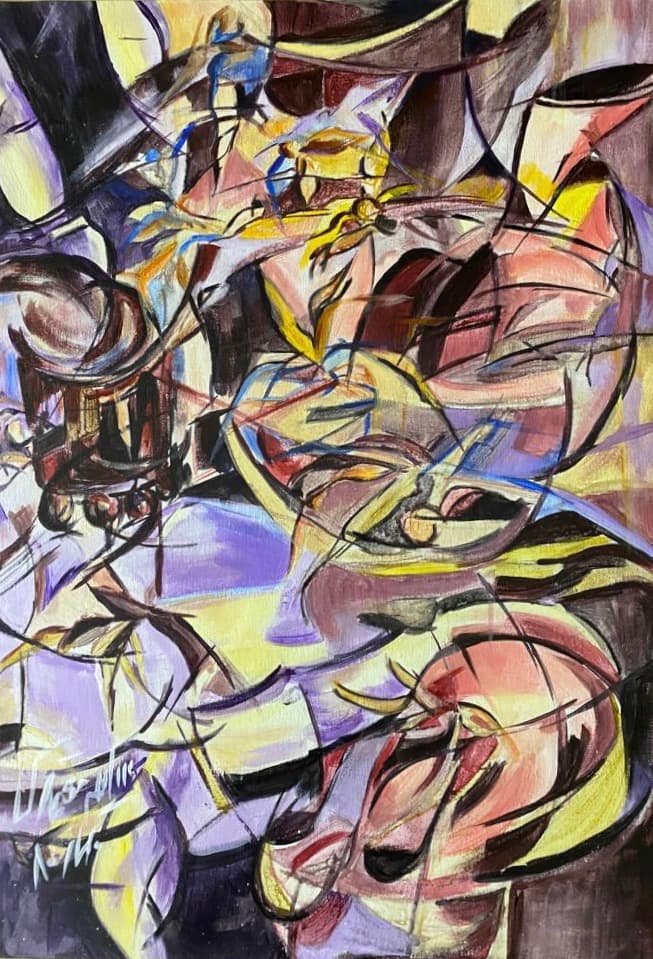
Unity in Diversity – Diversity in Unity Series By Salimeh Motamedi
Persian literature lies at the heart of many of Freshteh Heidari’s works, and she also incorporates Persian calligraphy into her art. There is a sense of searching in her work that recalls the atmosphere of Persian mystical literature. Hafez and Rumi, two of Iran’s most prominent poets, have been among her major sources of inspiration.
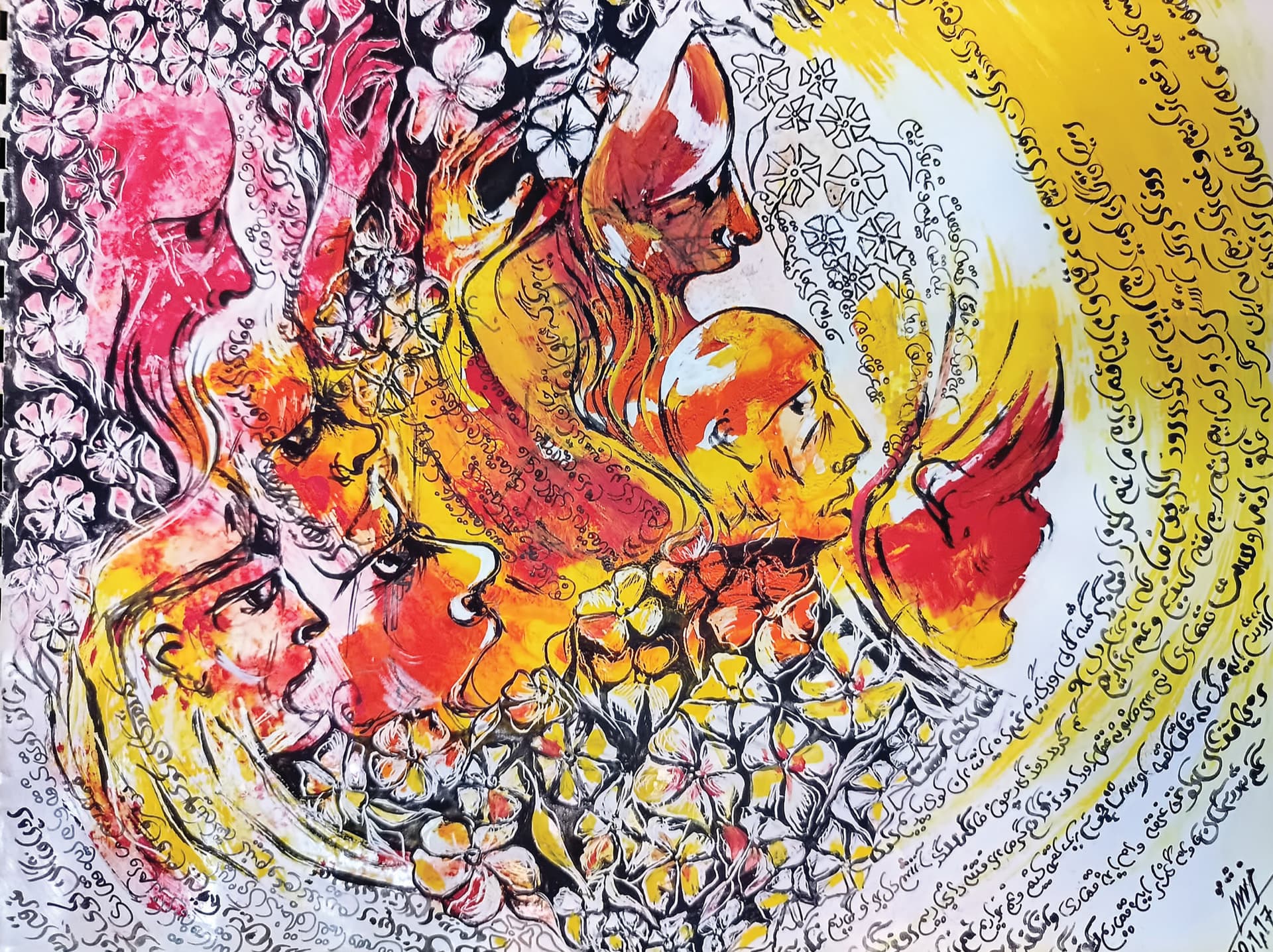
Death By Fereshteh Heidari
Fatemeh Chavoshinasab, who has a deep interest in the history of Persian literature, draws many of her ideas from the world of classical Persian poetry. One of her series was inspired by Abd al-Rahman Jami’s Yusuf and Zulaikha, focusing on the love at the heart of this story, which has received considerable attention in Persian literature. Persian gardens and richly patterned textiles also feature prominently in her work.
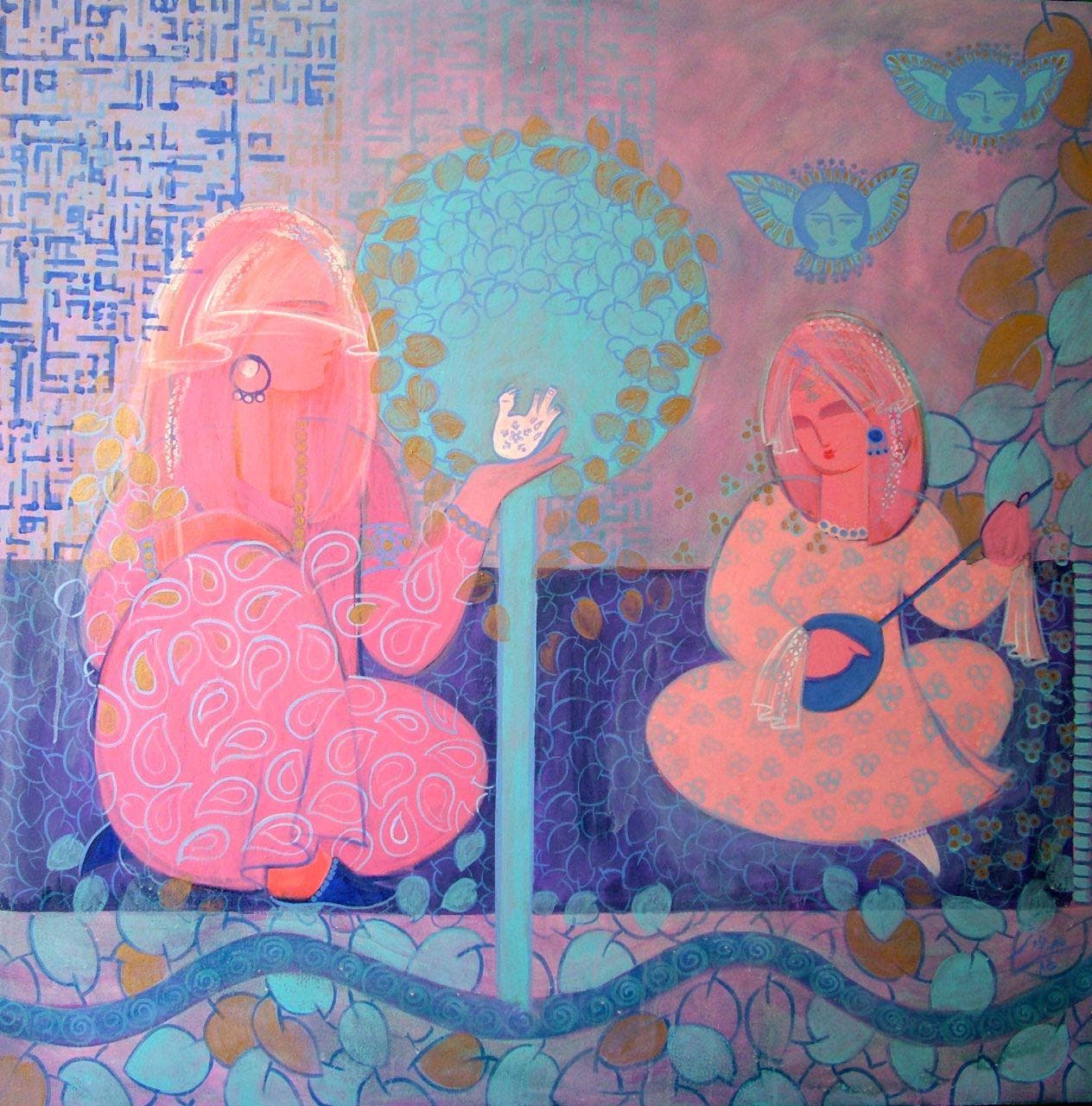
Yusuf and Zulaikha Series By Fatemeh Chavoshinasab
Persian poetry and calligraphy appear frequently in the works of Zahra Sharif-Kazemi. Her strong interest in Iranian history and culture has led her to bring poetry and Persian calligraphy together with elements drawn from Iranian art and architecture. Through these combinations, she gives elements of Iran’s cultural and artistic past a new presence in her work.
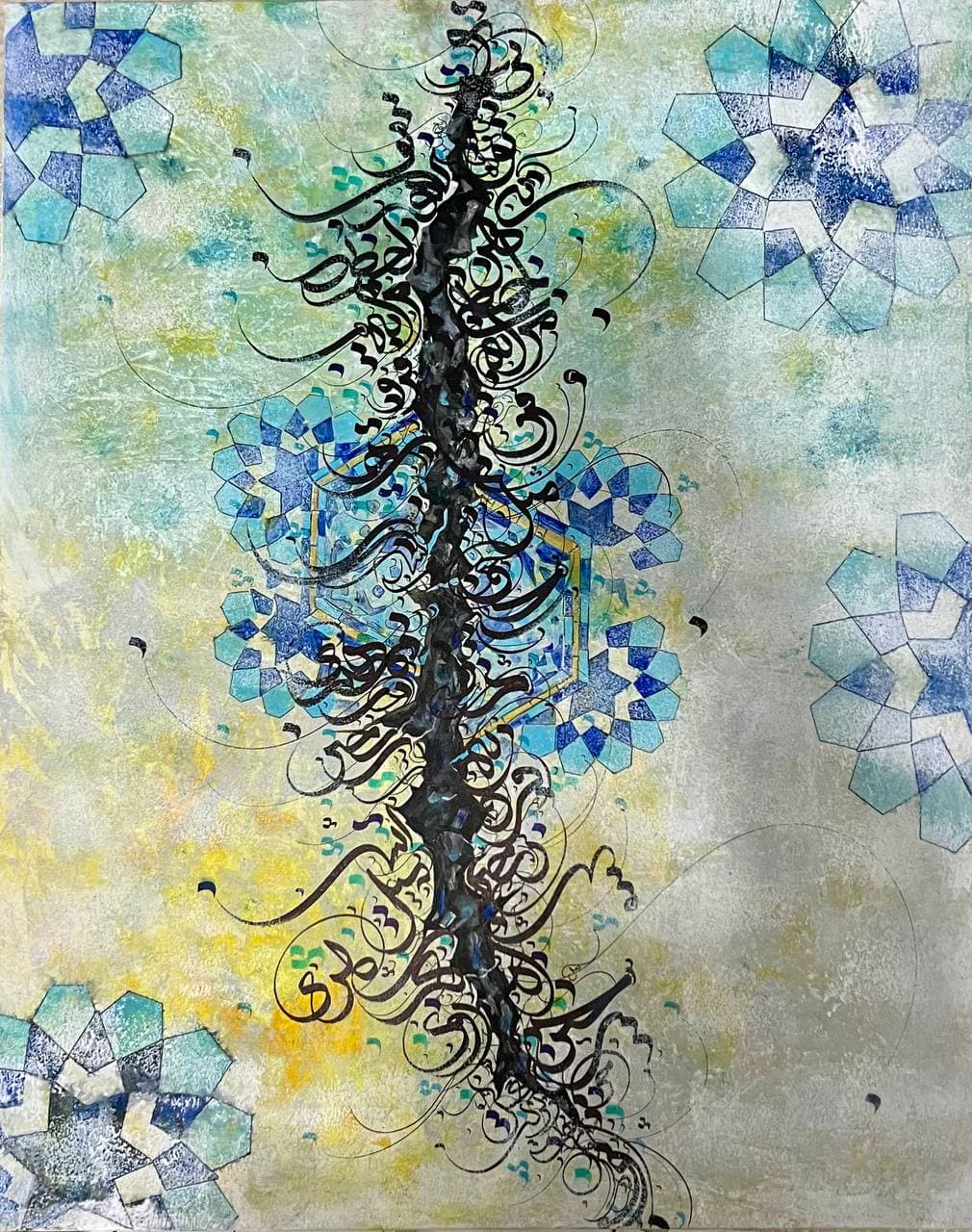
Hope By Zahra Sharifkazemi
These examples show that Persian literature remains present in the work of Iranian artists, though not in the same way it appeared in the miniatures of centuries past. Rather than illustrating a poem or story, Iranian artists today are more likely to explore the ideas, atmosphere, and emotions beneath its surface, bringing their own reading of the text into the work through their individual visual language and approach.